
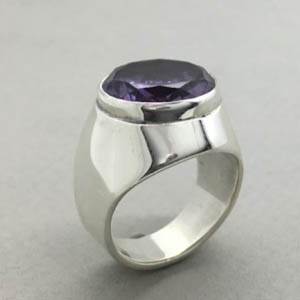
There is no shortcut when it comes to getting a high lustre and polish on your jewellery. Working through the stages of files, emery paper and then polish to get to that stage where you can see your own reflection in you jewellery is something to master before you go onto texturing.

Introduction To Finishes and Textures
There are many types of finishes and textures and they all have one thing in common, they add depth, elegance and interest to our designs. They can be a personal application or added to aid wearability, interest, enhancement or hide some minor imperfections. The finishes can be as simple as a high polish that is so reflective you can see your own reflection or made up of many techniques to add interest to a surface.
Consideration as to the finish of your item be be thought of right at the design concept and not an afterthought. Adding a texture to a piece is not a shortcut and not a substitute for finishing the piece correctly. Usually if you wish to add a satin or matt finish you usually have to achieve a flawless high polish finish so it is wise to be able to learn how to achieve a high polished finish first and then learn about textures and finishes once this technique has been mastered.
Polishing and texturing are the techniques that really don’t need that much specialist equipment.
- Hammers
- Centre Punches
- Rough Sandpaper
- Steel Block
- Liver of Sulphur
Achieving the right finish or texture takes careful consideration of the equipment you have in hand. A highly polished finish is one that makes a piece of jewellery timeless but an alternative finish can make a piece contemporary looking. You will learn to use simple inexpensive tools to achieve the right look for your piece of jewellery.
Finishes & Textures
The lessons below will give you a thorough understanding of the basics when it comes to finished and textures on jewellery. We start of with removing scratches from the metal and finishing it to a high professional finish.
Satin Finishes
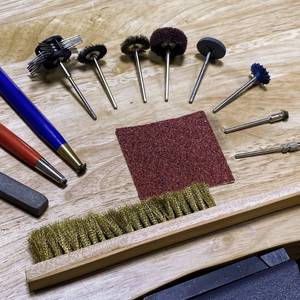
Achieving a satin finish can be as simple as using rough sandpaper or you can bur rotary tools to attach to your Dremel or flex shaft to make different grades of satin and brushed effects.
Textures
Now let's look at using hammer and making some noise. Usually the hammered textures are applied to the metal before the jewellery is put together as this texture and be quite destructive. Practice on some scrap metal first to see the patterns and play around with changing direction of the hammer blows.

Hammered Textures
Textures can be hammered onto your metal. Usually this is done at an early stage of construction. You can mahe the texture yourself using an old hammer or there are special texture hammers that you can buy.
Textures Using A Burr
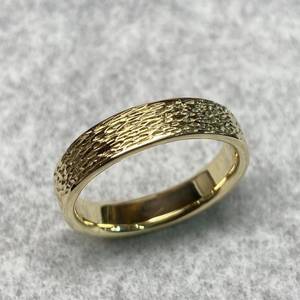
Burrs don’t just have to be used for their intended use, they can also be used to create interesting patterns and textures. Please make sure you do wear eye protection because the burrs do remove tiny pieces of metal and we want to keep you safe.

Reticulation
Have you ever thought about melting metal? I know sometimes when soldering, things don’t go right and you accidentally melt your metal. But have you ever thought about intentionally melting the metal to produce an interesting texture?
Using A Patina
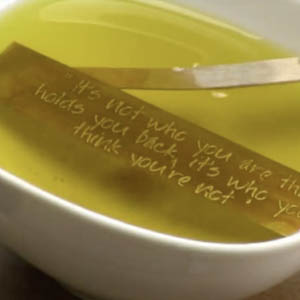
You can add substances to the surface of your metal to change the colour of it or produce an aged worn and tarnished look. Silver reacts with sulphur and that is why it tarnishes easily. But you can add a solution to speed this process up.
Learning Path
-
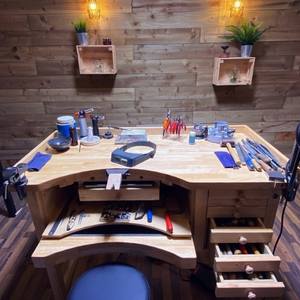
Setting Up A Studio
Wondering where to begin with setting up your jewellery work space? -

Introduction To Piercing
Help with choosing the right saw frame and blades and piercing projects -

Introduction To Soldering
The tools you need for soldering along with simple projects to help you perfect your technique. -
Introduction To Finishes and Textures
High polish, sating, matt finishes? All the help and techniques you need to achieve every finish -

Introduction To Stone Setting
Learn how to bezel, prong, bead channel and flush set with tips and tricks to help you achieve professional results. -
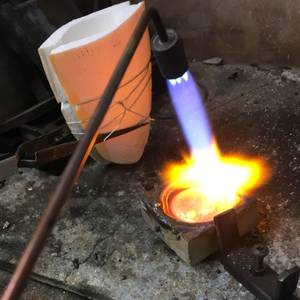
Introduction To Casting
Fancy casting? Try cuttlefish, delft clay, water, broom and even spaghetti casting to achieve amazing results. -

Introduction To Rolling Mills
With so many types of rolling mills available, which one best suits my needs? And once I have one where do I put it and how do I use it?