
There are only a handful of items you need to start soldering. They can be easily obtained from all tool suppliers including our tools store www.AtTheBench.store Once you have the basics, then you can start soldering straight away. You won’t need much more by the way of equipment for a long time so a starter kit will keep you going for years.

Introduction To Soldering
If there is one technique that is worth mastering, it’s soldering. There are basic soldering principles that, as soon as you understand, will make this technique straight forward. The trick to soldering is to make the solder invisible and not let it be seen. You will learn plenty of techniques gained from Andrew’s 35+ years in the trade giving you the confidence to tackle any soldering scenario you come against.
Soldering involves heat and flames and also liquid in the form of safety pickle to it is worth considering where you are going to carry out your soldering. Andrew likes to do it right on his bench so he can work fast but a lot of jewellers have a dedicated soldering area. This can then be lined with heat resistant material to make the whole set up safe.
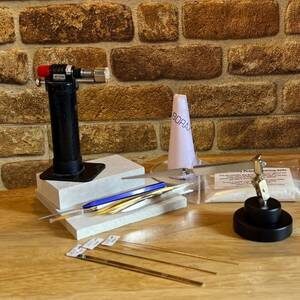
The basic soldering kit you buy from At The Bench is all you need.
- A hand torch
- Soldering block
- Soldering sheet
- Solder pick
- Standard AA tweezers
- Brass tweezers
- Third Hand Base and Reverse action insulated tweezers
- Borax Cone
- Borax Dish
- Borax Brush
- Silver Solder, easy (150mm), medium (150mm) and hard solder (150mm)
- 100g of pickling salts
There are no shortcuts when it comes to soldering. You have to get the conditions right for the solder to flow and flow where you want it to flow. Andrew shows you the right ways to achieve perfect soldering results every time. It will take a few tries but once you see that solder flow, wow, you will never get tired of it.
The Basics Of Soldering
A lot of people shy away from soldering because they usually don't understand the principles. There are no shortcuts to making the perfect solder joint but once you have the right equipment and make the conditions right for the solder to flow then you will be well on your way to mastering the art of soldering.

Torches
If you are just starting jewellery making then you can easily start with a small hand held torch that uses cigarette lighter gas. It is cheap and easily available and also comes in a slightly larger size too, for those larger heavier pieces of jewellery. There are more powerful torches available such as a propane torch and an oxygen and propane torch. these tend to come at a higher cost for the more advanced jeweller.
Soldering Surfaces
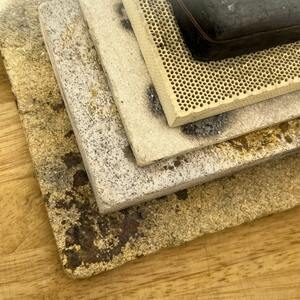
You will want somewhere to use the torch. Whether it is for soldering or annealing metal. The choice of soldering board can be a confusing one with so many available. Andrew likes to solder at his bench and so he uses a combination of a soldering board and soldering block to help protect his bench. You can even use the old fashioned charcoal block which provide good reflective properties when soldering.
Fluxes
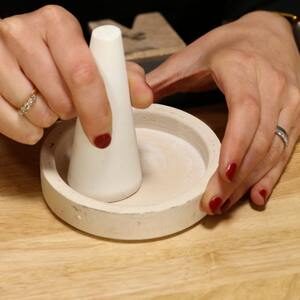
Andrew’s choice of flux is borax, a borax cone. But there are plenty more types of flux available. They are do the same job and that is to protect the area you are soldering, keeping the area clean and free from impurities, and helping the solder to flow where it is supposed to.
Soldering Projects
The projects we have below will introduce you to the technique of soldering starting with simple ring making. Even by learning this simple technique of soldering a ring it can open up a whole new world of designs. Chain making is always a good project as there are a lot of joins allowing you to perfect your technique.

Soldering A Ring
In these films Andrew takes you through the techniques you need to make your first ring. Getting the ends of the metal to come together accurately with no filing. Positioning it on your soldering block. Adding the flux. Turning on your torch and watching that solder flow.

Making A Simple Chain
Making chains is a great way to practice your soldering technique. After all there are many many solder joints in a chain with all those links. Andrew takes you through how to make up the links and solder them into a lovely strong chain. And by the end of it you should have mastered the basics of soldering.

Sweat Soldering
‘Sweat Soldering’ doesn’t sound nice does it? Well this technique when it comes to soldering can make or break the appearance of your jewellery. A lot of ‘teachers’ tell you to add a piece of solder at the junction of your 2 pieces to be soldered but this is often a bad way to solder. Learn how to sweat solder and your pieces will become more professional looking and with less cleaning up to do.
Learning Path
-
Setting Up A Studio
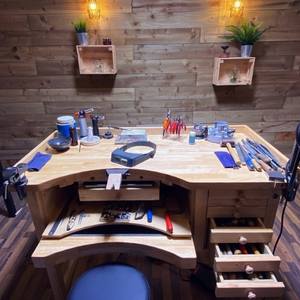
Wondering where to begin with setting up your jewellery work space? -

Introduction To Piercing
Help with choosing the right saw frame and blades and piercing projects -

Introduction To Soldering
The tools you need for soldering along with simple projects to help you perfect your technique. -
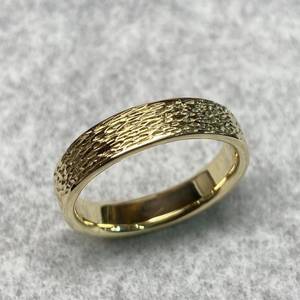
Introduction To Finishes and Textures
High polish, sating, matt finishes? All the help and techniques you need to achieve every finish -

Introduction To Stone Setting
Learn how to bezel, prong, bead channel and flush set with tips and tricks to help you achieve professional results. -
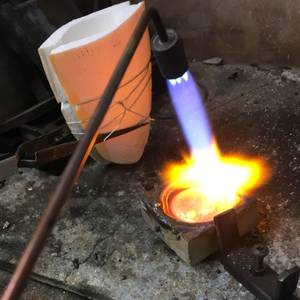
Introduction To Casting
Fancy casting? Try cuttlefish, delft clay, water, broom and even spaghetti casting to achieve amazing results. -

Introduction To Rolling Mills
With so many types of rolling mills available, which one best suits my needs? And once I have one where do I put it and how do I use it?