
If you are thinking about taking your hobby a bit more serious or want to progress your jewellery making up to the next level, you need to start with the fundamentals. Benches may be boring but they are an important choice depending on where you are going to locate your first workshop space.

Setting up a studio
If you fancy making your own jewellery there is a good chance that you will want to do it from home whether on your kitchen table, spare room or garden shed. There are a few things you need to sort out first, from getting the right equipment to understanding Health & Safety. The two most important things to consider are: having the right equipment and knowing how to go about jewellery making at home safely. Find out more about Setting Up A Jewellery Workshop.
If you’re new to Jewellery, we’d recommend starting at the top of the page and gradually working your way down. Some of the initial film also include downloadable work-along files, which you can access via our Resources section.
If you’re already familiar with the techniques, you may want to jump right in and search a particular technique or project or perhaps you are looking for some new tools – if so, then Click the All Films in the top navigation bar and look for what you want to learn.
A studio could be any space that you use to make jewellery. A kitchen/dining room table? An office desk in a spare room? A small shed or a dedicated space filled will jewellers tools. We all have to learn the basics but before that setting up our studio is important to make sure you are the most productive when sat at the bench.
- Health & Safety considerations to think about before you start
- Where are you going to be making your jewellery?
- What type of surface are you going to use?
- What tools you need before you start?
- Lighting for your workspace
In addition to a good understanding of the basics of jewellery making, there are a few essential pieces of kit you’ll need:
- A workbench
- An adjustable chair
- Basic workshop equipment
- Storage
- Lighting
- Setting your position right to avoid aches and pains
- The right tools you need to start making jewellery
- Laying out your studio
- Setting up your bench to work efficiently
- More advanced tools to develop your skills
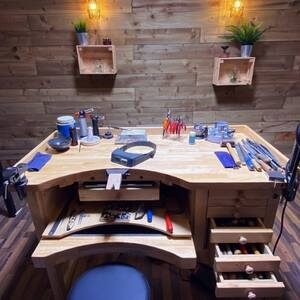
Bench Basics
In theory you can make jewellery anywhere and on any surface. But when making jewellery there are 'shavings' of metal produced, airborne polish and fluff, chemicals and all sorts, so it worth taking the time to think about the surface you are working on as well as your surroundings.
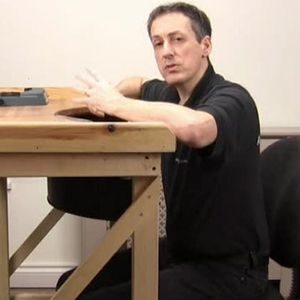
Getting Your Chair Height Right
We don’t adjust a chair for us to sit at the bench comfortably. We work the other way round. First we get a chair and not any old chair. Then we adjust the chair to fit us then we make the bench fit the chair and us. One size fits all certainly does not apply to jewellers benches.
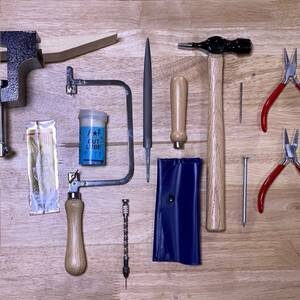
Starter Kit
The tool catalogues are full of tempting tools and equipment. Do I want them all? ….Yes. Do I need them all? …. No! Jewellery making tools are a necessary expense even for a beginner. So buy the best you can
Key concepts: Basic Tools • Saws • Saw Blades • Pliers • Torches
Setting Up Your Bench
You can simply get all your new shiny tools pieces of equipment and place them on your bench but do they all need to be there? Can you put some away and which ones are best left out?
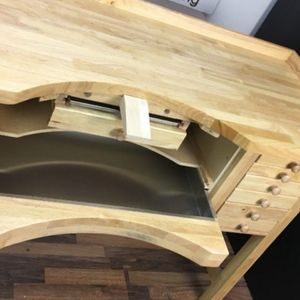
Arranging your bench
When you start making jewellery you usually don’t have many tools. You buy tools and keep adding them to your bench until you have more tools than bench showing. Andrew has recently upgraded his jewellers bench and he now has to transfer all his tools onto his new bench. But can there be a logical way of arranging the tools. Andrew says, “think like a pilot in his cockpit”. Intrigued?
Tools
So you are just starting out and you don't know what tools to buy. Take a look at the films we recommend and you will see how you can equip your tool box with a small amount of equipment. We try to produce films for At The Bench using the basic tool box starter kit only suggesting new tools as you need them. Whilst it is easy to spend spend spend, it is wise to only buy the tools you are actually going to use now and use the extra money on buying material ti make your jewellery.
Beginner Starter Kit
In this film we look at only suggesting the tools you actually need at the start of your jewellery making journey. These tools are the backbone to every technique and you will be using them on virtually every jewellery making project.
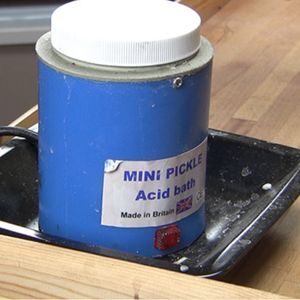
Advanced Tools
So we have covered the basic tools that we need to start creating but there are plenty of other more advanced but not necessarily expensive tools out there that look tempting. Andrew takes a look at these tools and shows you what each does and why you would want to buy it.
Arranging Your Workshop
If you simply have a desk to make your jewellery the decision of arranging your workshop is quite simple but as soon as you start adding more tools and equipment you will need to organise separate work areas depending on the type of work you wish to do.
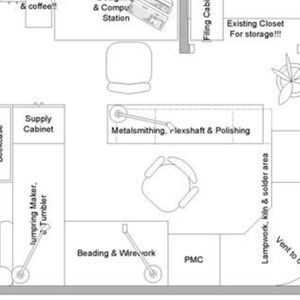
Organising The Workshop
In this film Andrew shows you how to arrange your workshop to make efficient use of your available space. Little thought is given to the floor plan. Keeping everything arranged in a way to become more tidy, more efficient and more productive.
Learning Path
-
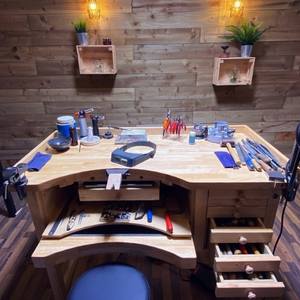
Setting Up A Studio
Wondering where to begin with setting up your jewellery work space? -

Introduction To Piercing
Help with choosing the right saw frame and blades and piercing projects -

Introduction To Soldering
The tools you need for soldering along with simple projects to help you perfect your technique. -
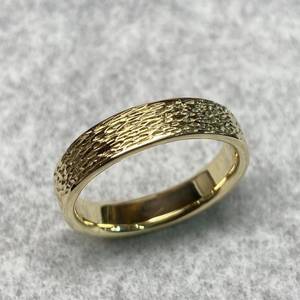
Introduction To Finishes and Textures
High polish, sating, matt finishes? All the help and techniques you need to achieve every finish -

Introduction To Stone Setting
Learn how to bezel, prong, bead channel and flush set with tips and tricks to help you achieve professional results. -
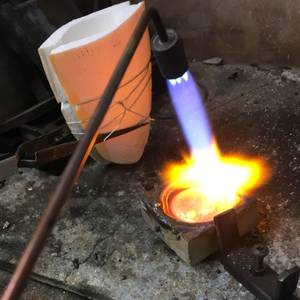
Introduction To Casting
Fancy casting? Try cuttlefish, delft clay, water, broom and even spaghetti casting to achieve amazing results. -

Introduction To Rolling Mills
With so many types of rolling mills available, which one best suits my needs? And once I have one where do I put it and how do I use it?